CASE STUDY — GYM PLATFORM · 2025–2026
Koda IronView
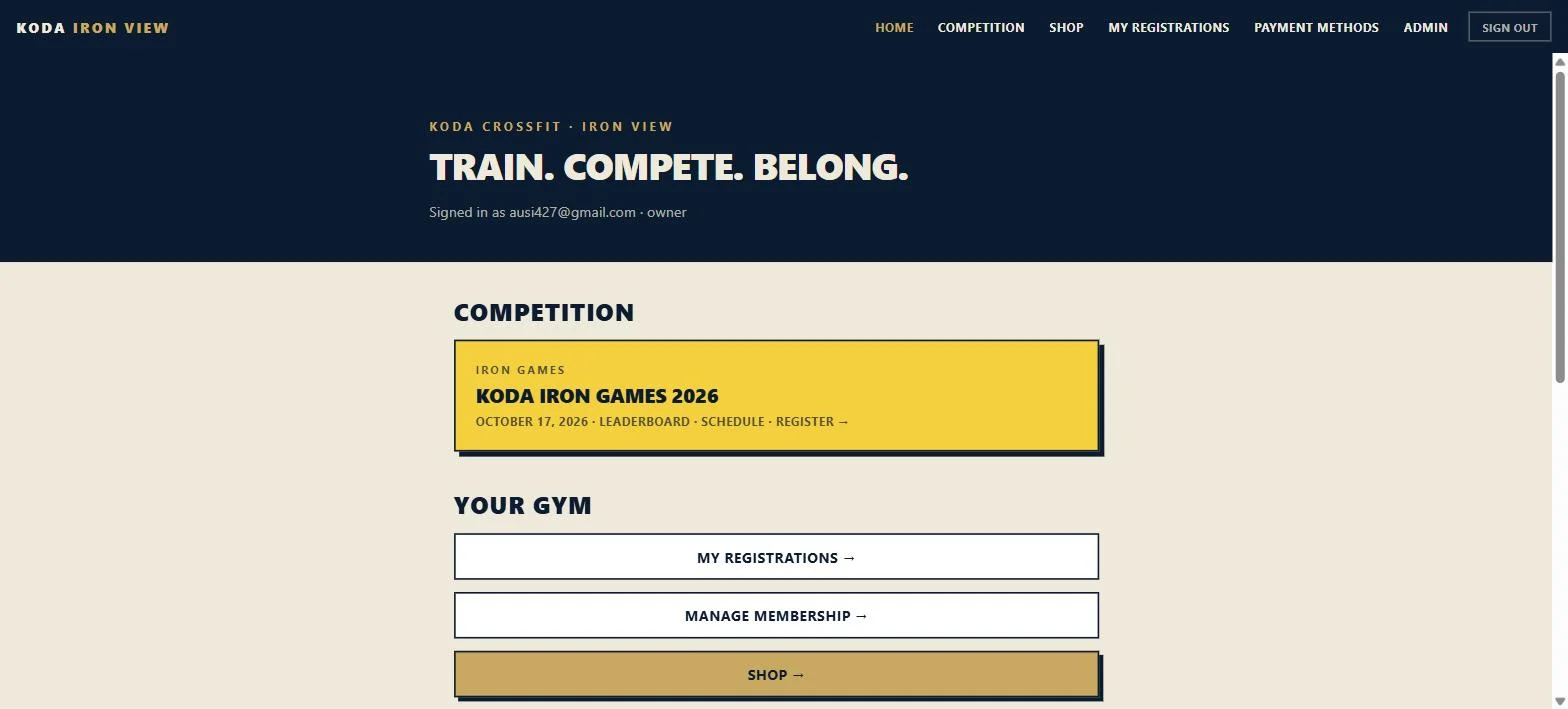
A cross-platform gym platform for Koda CrossFit — iOS, Android, and a web PWA from one codebase. Retail, memberships, competitions, and guest passes, all running on a backend I designed. The twist: Koda was a freelance client of mine ten years ago.
- 3
- Square payment surfaces Web, In-App, Mobile POS
- iOS · Android · PWA
- one codebase React Native + Expo
- 8 pkgs · 36 routes
- Turborepo monorepo
The problem
Koda CrossFit was one of my first freelance clients — a WordPress site, back around 2015. It's in the archive. A decade later, the gym had outgrown a stack of disconnected tools: one thing for payments, another for competitions, a spreadsheet for guest passes, a separate service for workouts. Members felt the seams. So did the staff.
They needed one app that did all of it, on every device a member might own. And the ambition went further: build it so it could be cloned and deployed for other gyms, not just Koda.
The build
Koda IronView is a single React Native 0.85 / Expo 56 codebase that ships to iOS, Android, and the web as an installable PWA. It's organized as a Turborepo monorepo — eight packages, thirty-six routes — so shared logic stays shared and each surface still gets what it needs. NativeWind keeps the styling consistent across all three.
The backend is Supabase Postgres with row-level security doing the real access control, plus Deno Edge Functions for the server-side work. Payments run through Square across three distinct SDK surfaces: the Web Payments SDK on the PWA, the In-App Payments SDK (with Apple Pay and Google Pay) on mobile, and Mobile POS tap-to-pay for in-person sales at the gym. Same money, three checkout experiences, one ledger.
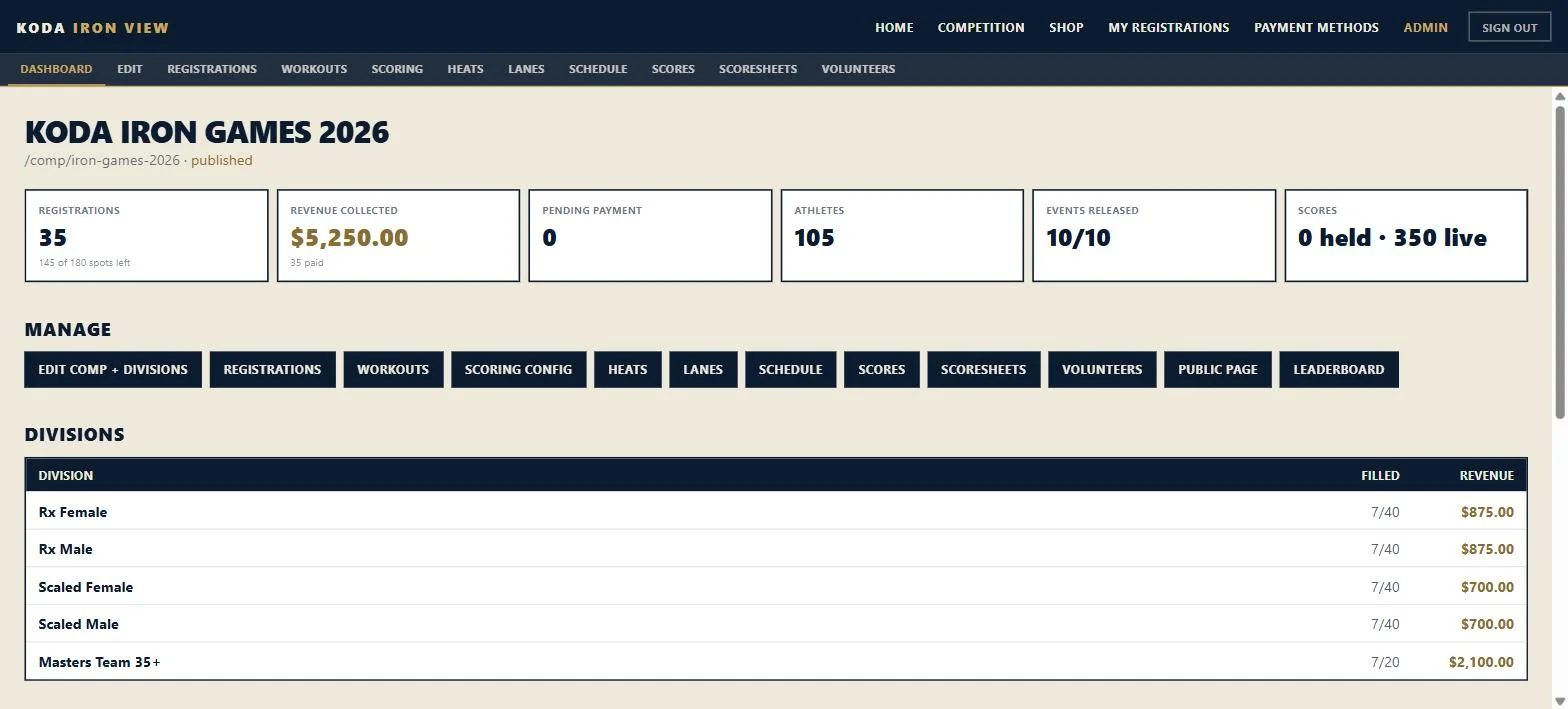
On top of that sits the Iron Games competition platform — registration, divisions, heats, scoring, and live leaderboards — plus QR guest day-passes, a SugarWOD workout proxy, and membership freeze and cancel queues. EAS handles builds and over-the-air updates; Sentry and PostHog handle knowing what's actually happening in production.
Stack decisions
Why React Native + Expo. Three platforms, one solo engineer. Maintaining separate native apps plus a web app wasn't realistic. Expo's build and OTA pipeline means I can ship a fix to all three surfaces without waiting on an app-store cycle for every change.
Why Supabase with RLS. Gym data is member data. Putting row-level security in the database means access rules are enforced at the source, not hopefully-remembered in application code. Deno Edge Functions handle the logic that shouldn't live on the client.
Why three Square surfaces instead of one. Because a gym sells three ways: online, in the app, and at the front desk. Each needs its own native checkout to feel right. Unifying them behind one payment model was the hard part — and the reason the platform actually replaces the tool sprawl instead of adding to it.
Outcomes
Koda's operations now run on Koda IronView. The PWA is live at koda-ironview.pages.dev, and the codebase is built as a clone-and-deploy template so the next gym is a configuration, not a rebuild. Ten years after I built their first website, the whole business runs on software I wrote. That arc is the one I'm proudest of.
Have a platform-sized idea?
Cross-platform product, real payments, real users — this is squarely the work I do. Tell me about it.